
What is EMS, and how does it actually work? Whether you’re new to fitness or deep into your training journey, understanding the science behind EMS—short for Electro-Myo-Stimulation—helps you appreciate why it’s quickly becoming the most effective, time-saving workout in the world.
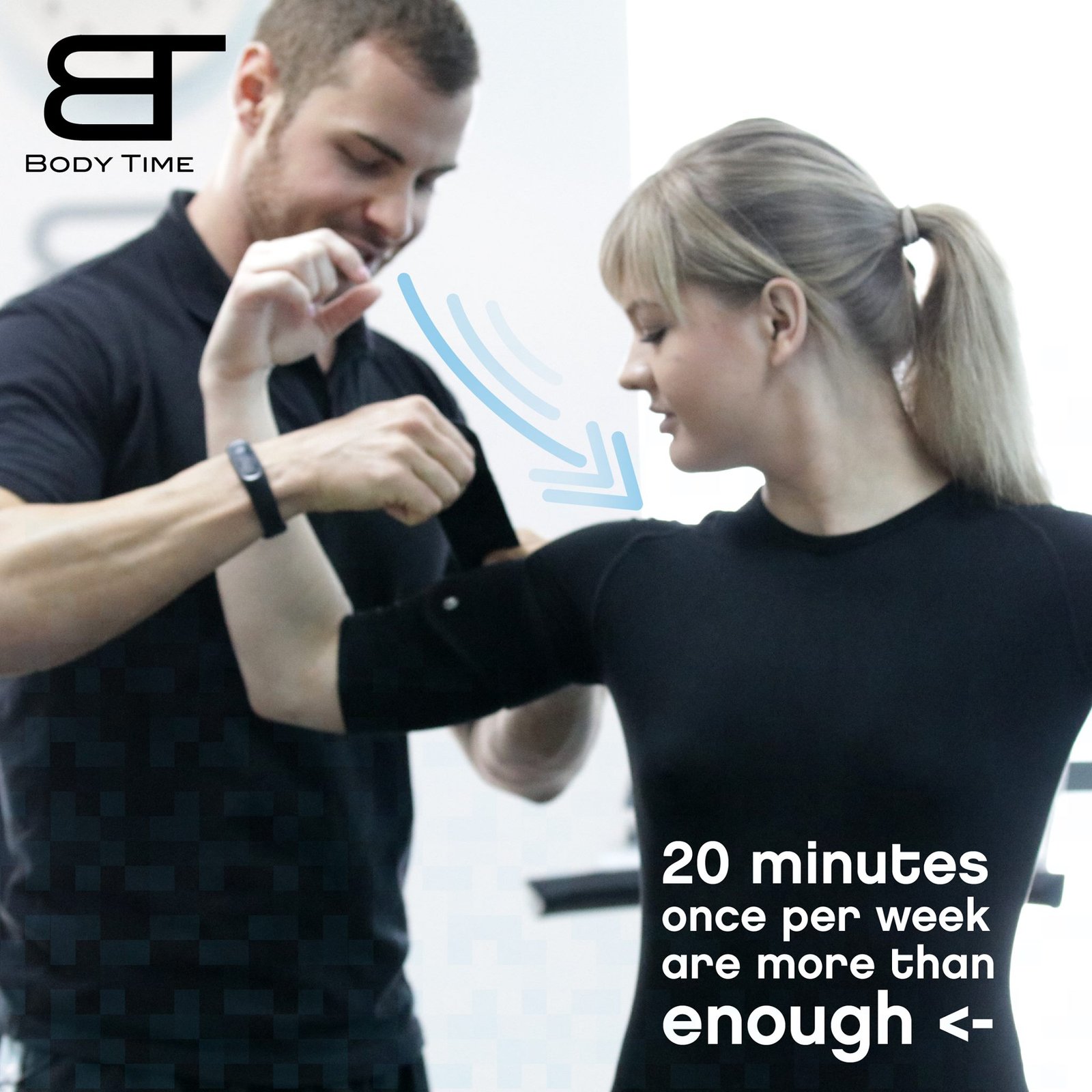
At BODY TIME, EMS training combines ancient principles of electrotherapy with modern fitness innovation to deliver total body transformation in just 20 minutes per week.
Let’s break down the origin, mechanics, and scientific foundation of EMS training—and why it’s safe, effective, and built on over 2000 years of real-world use.
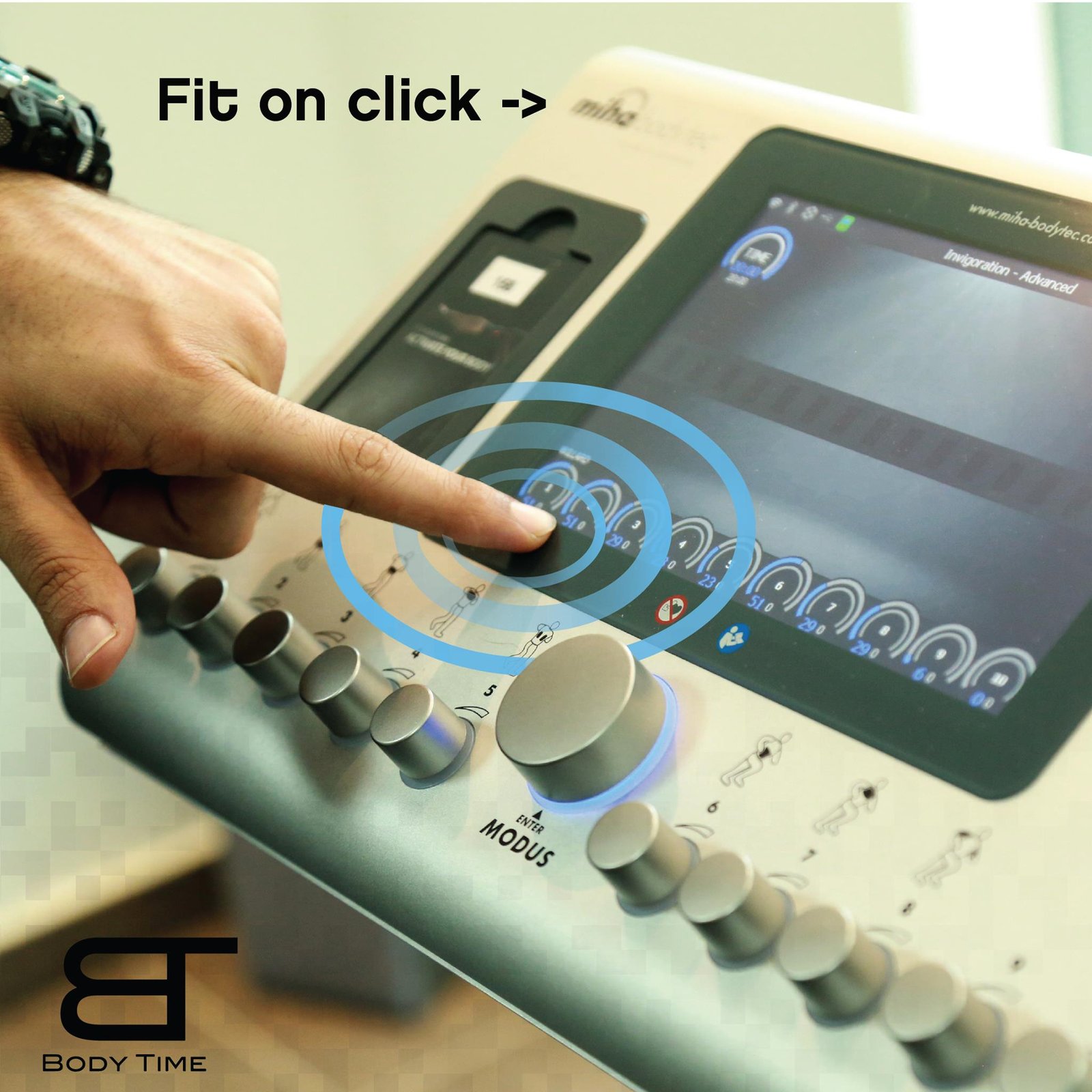
What Does EMS Stand For?
EMS is an abbreviation for:
- Electro – from the Greek “ēlektron,” meaning electric
- Myo – Greek for muscle
- Stimulation – Latin stimulatio, meaning to activate or excite
So, Electro-Myo-Stimulation literally means: stimulating muscles through electrical currents.
How Does EMS Work?
In traditional strength training, your brain sends electrical signals through the central nervous system (CNS) to engage your muscles. This causes muscle contractions that generate movement, strength, and control.
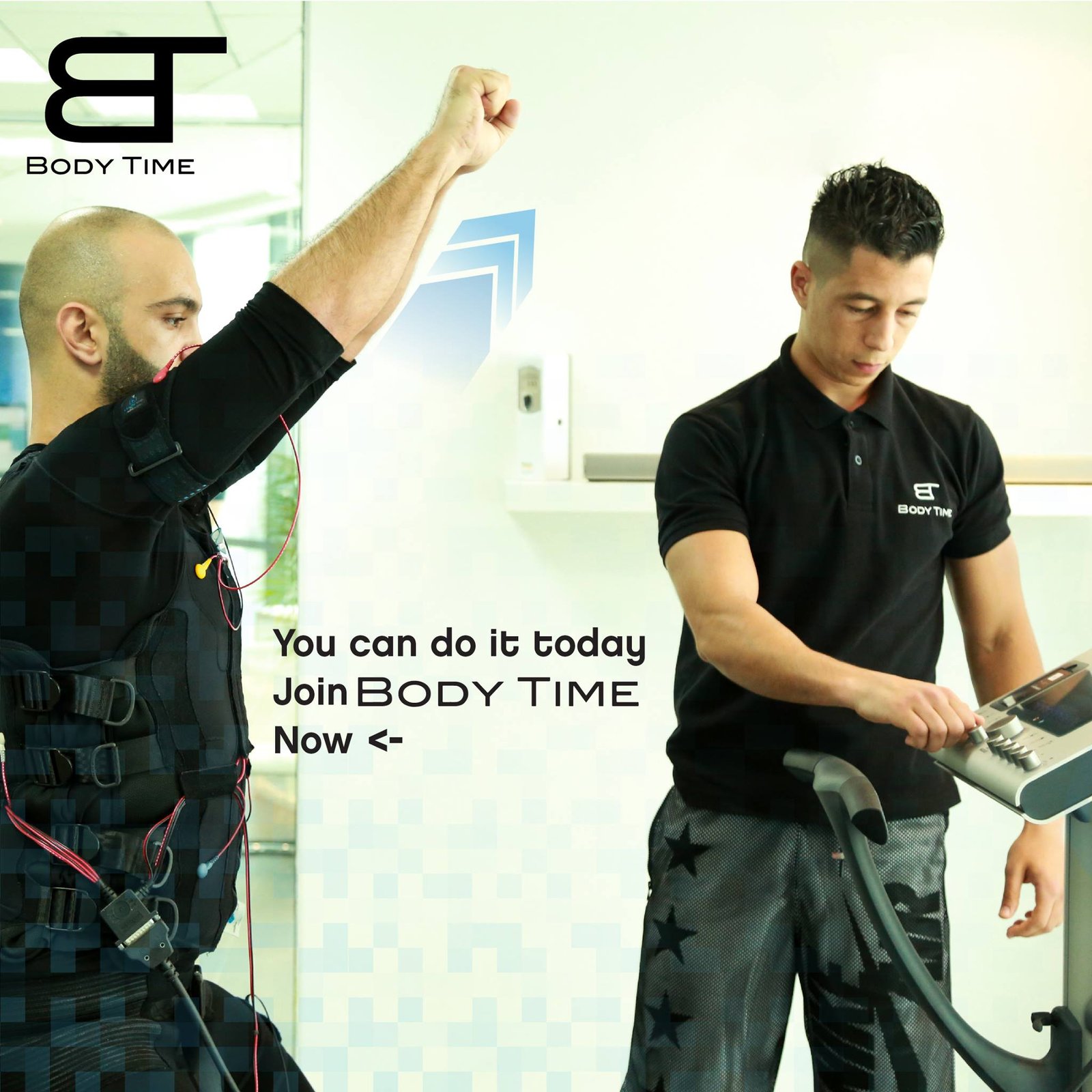
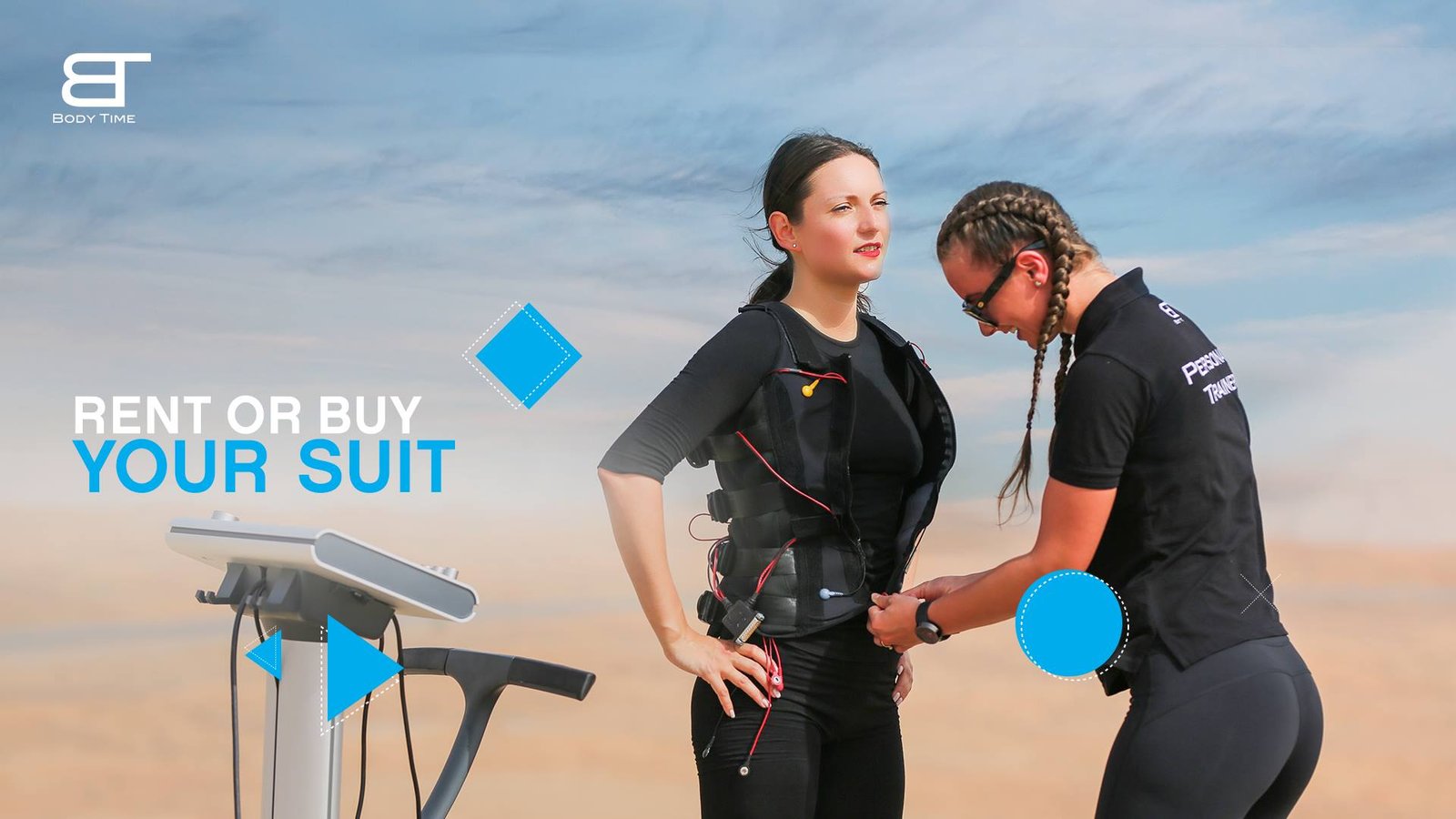
In EMS, low-frequency electrical impulses are applied directly to the muscle via external electrodes built into the BODY TIME EMS training suit. These impulses mimic the brain’s natural signal, causing the muscle to contract in exactly the same way—but more intensely and consistently.
Here’s why it works so well:
✅ Your muscles do not differentiate between an internal (brain-generated) or external (electrode-generated) signal.
✅ With EMS, you can target deep muscle fibers that are difficult to engage voluntarily.
✅ The electrical impulses contract all major muscle groups simultaneously, delivering a full-body workout in just 20 minutes.
What Does EMS Feel Like?
Most people describe the sensation of EMS as a gentle pulse or vibration, which becomes stronger as intensity increases. It’s not painful or uncomfortable, and it can be precisely adjusted based on:
- Your fitness level
- Your muscle endurance
- Your training goals (fat loss, strength, rehab, etc.)
At BODY TIME, every EMS session is supervised by a certified personal trainer, ensuring safe, goal-driven adjustments every time.
A Brief History of EMS: From Electric Eels to Elite Sports
📜 200 BC – Ancient Electrotherapy
The earliest record of electrical treatment comes from Asia, where electric animals (e.g., electric fish) were used to treat pain. Roman physician Scribonius Largus documented using electric eels to treat headaches and gout.
⚡ 19th Century – Faraday and Duchenne
Michael Faraday and neurologist Duchenne used early electrical generators to stimulate localized muscle contractions for medical research and therapy. Their work forms the foundation of today’s EMS science.
🧪 1939 – Stronger Than the Brain
Researchers discovered that external electrical stimulation produces stronger contractions than the body can generate naturally, making EMS ideal for muscle building, recovery, and neuromuscular training.
🏋️ 1960s – Used in Professional Sports
Elite athletes and Olympians began using EMS to improve performance, accelerate recovery, and rehabilitate after injury. At the same time, TENS (Transcutaneous Electrical Nerve Stimulation) technology was developed to manage chronic pain, based on similar principles.
🔬 1990s – EMS Becomes Medical & Athletic Standard
EMS became widely accepted in both physiotherapy and professional training environments for its ability to safely strengthen and rehabilitate muscles.
💪 2003 – Full-Body EMS Arrives
The first whole-body EMS system launched, allowing for simultaneous stimulation of all major muscle groups—a total revolution in training efficiency.
🏢 2017 – First EMS Fitness Studio Opens in Hammersmith
Studios like Surge and BODY TIME began making EMS training commercially available, bringing scientific-grade technology to everyday people.

Why EMS Works Better Than Traditional Workouts
While conventional training activates only 30–60% of muscle fibers, EMS can engage over 90% in every contraction.
This results in:
- 🔥 Faster fat burn
- 💪 Accelerated muscle growth
- ⚖️ Improved posture and joint support
- 🧠 Neuromuscular re-education
- 🕒 Time savings of up to 3 hours per week
Who Is EMS Suitable For?
EMS is ideal for:
- Healthy adults over 18
- Busy professionals with limited time
- Athletes looking to enhance performance
- People with joint or back issues
- Postpartum women (after clearance)
Read more in our post: Who Is EMS Suitable For?
Experience EMS at Home or in Studio
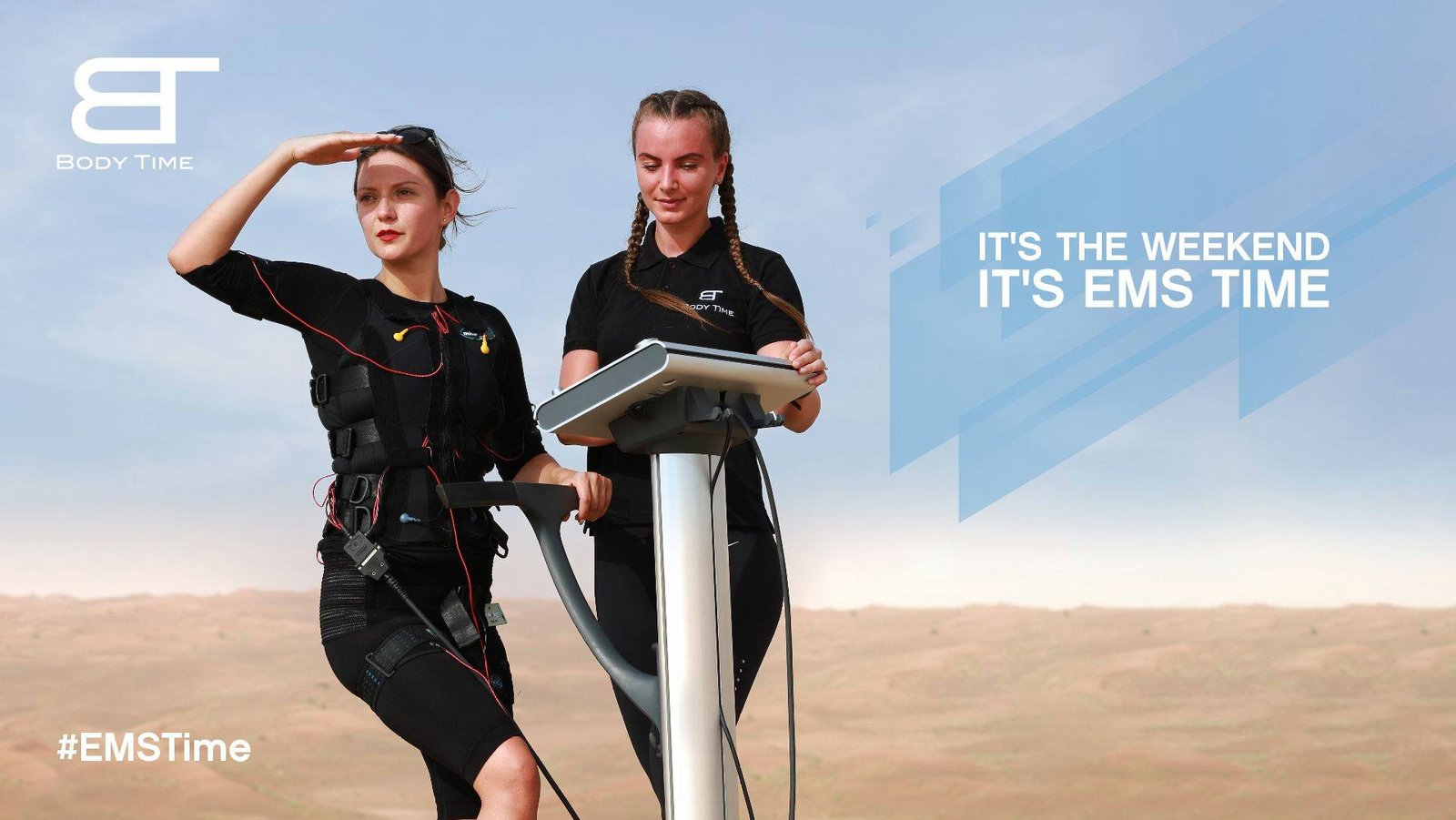
You can train with EMS at a BODY TIME studio under expert supervision, or from the comfort of your own home using the iBody EMS Smart Home Training System.
Created by fitness visionary NORBERT SIMONIS, iBody lets you:
- Train in 10–20 minutes/week
- Use AI guidance and app control
- Get full-body activation on demand
- Stay fit anytime, anywhere

Interested in the Science and the Business?
The EMS fitness industry is exploding, and Saudi Arabia, the UAE, and global markets are opening up for entrepreneurs, trainers, and investors.
Explore BODY TIME X to:
- Open your own EMS studio
- Sell iBody units
- Become a certified EMS expert
- Automate your business with smart CRM tools
Bring the science of EMS to your city—and build a career around transformation.
Final Thoughts: EMS Is Proven Science, Not a Fad
From ancient Roman treatments to modern AI-powered wearables, the science of EMS has evolved—but the results speak for themselves.
At BODY TIME, we take that science and deliver it personally, powerfully, and professionally, so you can train smarter—not harder.
📩 Book your free trial session now and experience the power of 2000 years of science—compressed into just 20 minutes a week.
